Krista Was Here

My National Park Adventures.

  • National Park of American Samoa

    Wow. I can’t believe I’m sitting down to write about my final national park trip! This journey has been several years in the making. When I started, there were 59 national parks, and since then, 4 new ones have been added. I always hoped I’d make it to all the parks, but never knew if it’d actually happen. Life can throw you some pretty crazy curve balls, but I’ve also learned it has a funny way of working out… and here we are. Whether this is your first time reading my blog, or you’ve been here since the beginning- thank you for coming along for the ride!


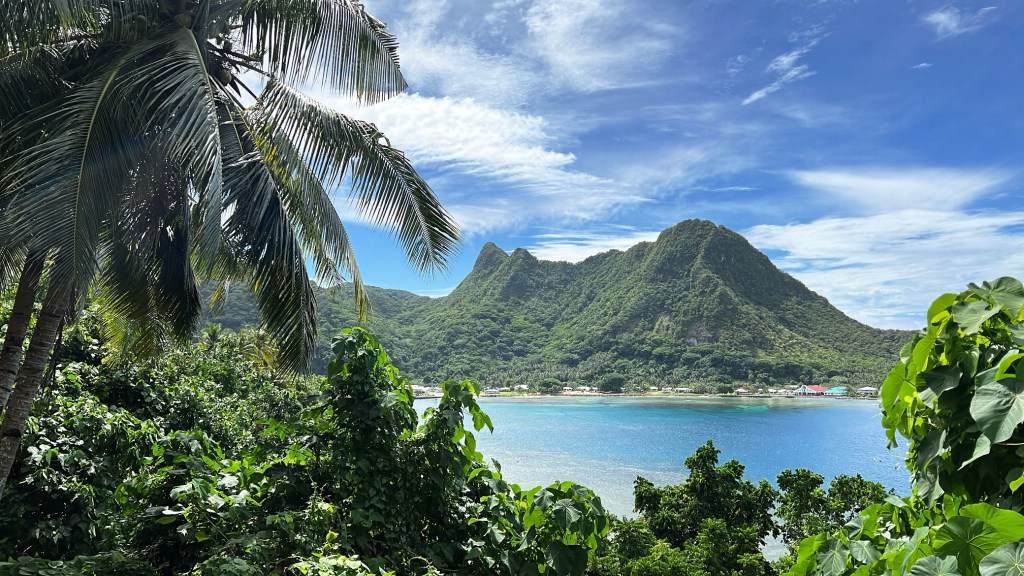
    National Park of American Samoa is the only U.S. National Park in the Southern Hemisphere, and is said to be the heart of the South Pacific. The park is distributed across three different islands: Tutuila, Ofu, and Ta’u. Tutuila is the main island, where the capitol (Pago Pago), airport, and national park visitor’s center are located.

    Traveling to American Samoa is definitely an adventure in and of itself. It’s no mystery that this is one of the most remote national parks in the United States. American Samoa is located some 2,600 miles southwest of Hawaii, and you’ll need a passport to get there, even though it’s considered U.S. territory. Flights to American Samoa depart from Honolulu twice a week via Hawaiian Airlines— you can choose to fly on a Monday or Thursday. We decided to fly on a Thursday, however the direct flight from Salt Lake City arrived to Honolulu at the same time the flight to American Samoa departed… meaning if we still wanted to get to Samoa on Thursday, we’d need to adjust our schedule and fly to Honolulu on Wednesday. An extra 24 hours in Hawaii isn’t something I’d ever complain about, however travel these days is unpredictable at best, so I was holding my breath until we landed in American Samoa. I didn’t care about travel mishaps on this trip, as long as it happened after I made it to the park!

    Thankfully, we landed in Pago Pago the next evening with no issues. We had four nights and five days to explore the island of Tutuila before flying back to Hawaii. There’s always something special about arriving to a new destination at night— getting to take in the scenery for the first time as you wake up the next morning is some kind of magic. We stayed at Sadies by the Sea, where luckily all the rooms had oceanfront views *insert heart eyes emoji*.

    Our first stop that morning was to the visitor’s center. Because we didn’t rent a car, we caught one of the local busses. On the island of Tutuila, “Aiga” are local, unscheduled buses that will take you almost anywhere on the island for just $1. You just look for one of the colorful, open air busses driving by and wave them down to be picked up— pretty easy! It’s also a fun and unique way to interact with locals— we learned that because American Samoa is so remote, there isn’t a “tourist season,” but they welcome all visitors.

    At the visitor’s center we were greeted by Ranger Pa’i, who was a true delight. We told her this was our final national park to visit, and she made us feel like rockstars. She made us official national park certificates, took our picture, and genuinely celebrated this achievement with us.

    While at the visitor’s center, we met a few other “parkies,” one of whom we really connected with. Her name was Lizz, and she gave me permission to share a bit of her story. Lizz was born with cystic fibrosis, and is rocking it 7 years post-double lung transplant! She’s on a journey, just like we were, to visit all the national parks in the United States. Lizz is an inspiration and truly approaches each day as a gift, which is such a great reminder to us all. We feel so, so lucky our paths crossed. Lizz was also the smart one out of the three of us, and rented a car— while we had originally planned to make due with the local busses, we quickly learned that the busses didn’t actually drive to the park boundaries. Thankfully, we became fast friends with Lizz, and she let us tag along with her to explore the park! Without her, I’m honestly not sure what our time in American Samoa would’ve looked like— for so many different reasons. Thanks for being the real MVP, Lizz!

    We left the visitor’s center with big smiles and happy hearts, ready to go exploring! First up was the scenic drive— honestly though, everywhere you drive on the island is scenic. We eventually made it to the top of one of the mountain passes, and ventured on our first hike. We started with the Lower Sauma Ridge Trail— rated as moderate, yet was short (less than 1 mile RT). This interpretive trail took us through a rainforest, and eventually lead to spectacular views of the northeast coastline of the island and the Vai’ava Strait National Natural Landmark.

    Our second hike was the Pola Island Trail. This was an even shorter, fairly flat trail along a rocky beach with views of the coastline and Pola Island. There are about a dozen hikes around the island of Tutuila, ranging from easy to challenging. If you’re visiting for more than a few days, I’d recommend checking out as many trails as you can. Just remember hiking in Samoa is hot and humid, to say the least. Be sure to wear sunscreen, bug spray, sunglasses/hat, and bring along more than enough water!

    The next day, we planned to explore the island of Aunu’u. This island isn’t technically a part of the national park, but still very much worth exploring. To get to the island, you drive to the eastern tip of Tutuila and ask one of the boats waiting in the wharf to take you across. The boat ride costs $2 per person, each way, and is a relatively easy 10-15 minute ride. Once we got there, we walked down the road a bit before parking ourselves on the beach. Our plan was to spend the day snorkeling, however the tides made that quite challenging— it was difficult to even stand up in the water without getting knocked off your feet. We only lasted an hour or two before ultimately deciding to head back, but I’m still glad we made the trip!

    As we were driving back towards our hotel, we decided to try and find this roadside bar and grill we thought we saw earlier. Tisa’s Barefoot Bar is owned by Tisa and her husband who are from a local village. It’s just the two of them running their establishment, and they only serve foods they have personally grown or caught. We learned they are usually open by reservation only, however they graciously let us stay, and cooked us up some delicious food while we enjoyed each other’s company. They have no menus, and payment is only accepted via Venmo or PayPal, but trust me when I say this was some of the best food I’ve ever eaten! The beachfront view didn’t hurt either 😉

    Once we made it back to the hotel that evening, we did some snorkeling. The coral was vibrant, tropical fish abundant, and I even saw a turtle! I could’ve stayed out there for hours playing with my new underwater camera case I brought along.

    Our next full day on the island was Sunday. In the Samoan culture, Sunday’s are reserved for church and resting. Ranger Pa’i invited us to attend church with her, so that morning we met her at Capstone Assembly of God. The service was spoken in their native language, but everyone was very welcoming, and it was a great experience. We spent the rest of our morning on a driving tour of the west side of the island before finding ourselves back at Tisa’s for another amazing meal. A rainstorm came through right as we sat down to eat, with a stunning double rainbow following shortly thereafter. I swear, every day I kept pinching myself to make sure I wasn’t dreaming.

    Monday was our last full day in American Samoa. Lizz had to return her car in the morning, so our plan was to relax and snorkel at our hotel. Unfortunately, the weather threw a wrench in our plans and it rained most of the day. The hotel let us pay a little extra for an extremely late checkout at 6 pm, so we passed time by doing laundry and watching movies. After checkout, we ate dinner at the hotel restaurant before making our way to the airport. Our flight didn’t leave until 11:30 pm that night, and with an overheated & overcrowded plane, neither of us slept much at all 😦

    We landed in Honolulu the next morning, and after a mad dash through customs, immigration, and security, we made it on our flight to Kauai by final boarding. When we landed in Kauai, we were both in survival mode after not sleeping for too many hours to count— “get the rental car, breakfast & coffee, and head straight for the beach,” was our plan. We made it to Poipu beach where the sea turtles were waiting for us & the rest is basically history!

    We enjoyed a quick, yet full three days in Kauai which included: napping, snorkeling, sea turtles, delicious food, Waimea Canyon, Kauai Coffee Company, Hanalei Bay, shaved ice, getting tattoos, tastings at Koloa Rum Company, and more sea turtles. Before we knew it, the end of our amazing vacation was upon us, and we were boarding another red eye flight. What a truly wonderful last parks trip it was!! ❤

  • Congaree National Park

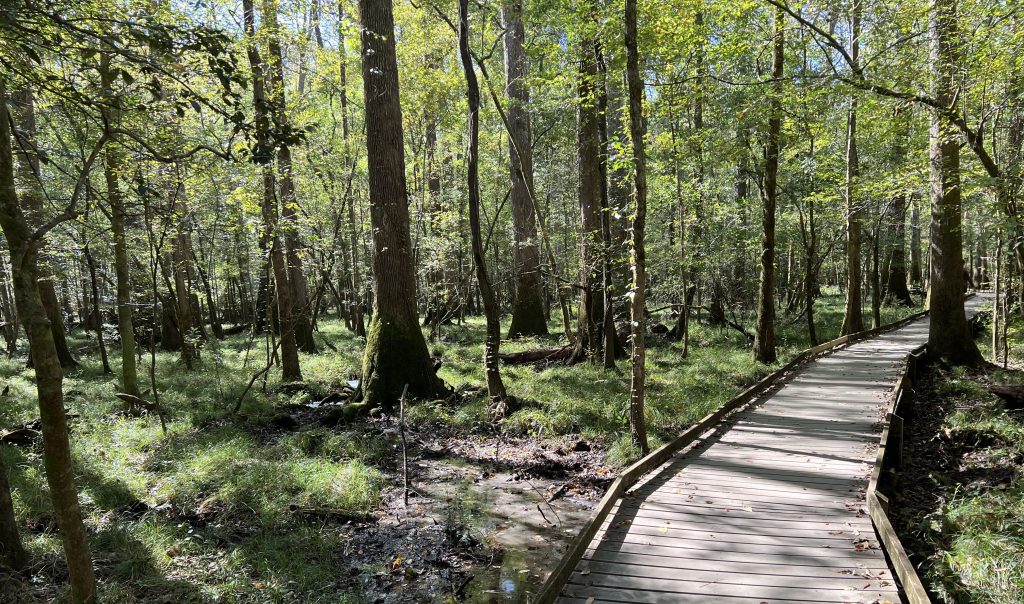
    Congaree National Park is located in central South Carolina, and preserves the largest tract of old growth cypress left in the world. The forest populates a floodplain of the Congaree and Wateree Rivers. The park contains the tallest of 15 species of trees, plus six national champion trees for their overall size. Only the redwoods stretch taller than Congaree’s biggest trees!


    We woke up early on our last morning in morning in Charlotte, NC. We stayed with one of my mom’s best friends, who lives about 1.5 hours away from Congaree National Park. Our flight was scheduled to leave from Charlotte that evening, giving us the day to explore the park. With its compact size, we really just needed that day for the park. The main attraction at Congaree is the boardwalk trail through the forest. This trail is accessible, less than 3 miles long, and provides a leisurely way to experience the wilderness of Congaree National Park.

    Throughout our walk, we used a brochure from the visitor’s center for a self-guided tour. We referenced this as we completed our walk throughout the park—it was a great way to learn about the unique environment and history of the park. To my surprise, we actually saw a variety of wildlife during our time at the park as well. We saw massive spiders (and their webs), turtles, birds, and even some wild hogs! We had a lot of fun together exploring our 62nd national park.

    If you’re visiting Congaree National Park and want to explore off the boardwalk, the park offers a few more challenging hikes as well:

    • Weston Lake Loop (4.4 miles RT): Passes through cypress knees and waterbirds along Cedar Creek
    • Oakridge Trail (6.6 miles RT): Travels through large oaks where you might see wild turkeys
    • River Trail (10 miles RT): Goes to the Congaree River
    • Kingsnake Trail (11.7 miles RT): Common for bird watchers along Cedar Creek

    In the spring and fall, park rangers guide canoe tours with canoes, floatation devices, and paddles provided. If visiting outside of the spring and fall, visitors can also canoe or kayak on the Cedar Creek Canoe Trail (15 miles), however you must bring your own boat or rent the appropriate gear in Columbia. Beware of fluctuating water levels.

  • New River Gorge National Park

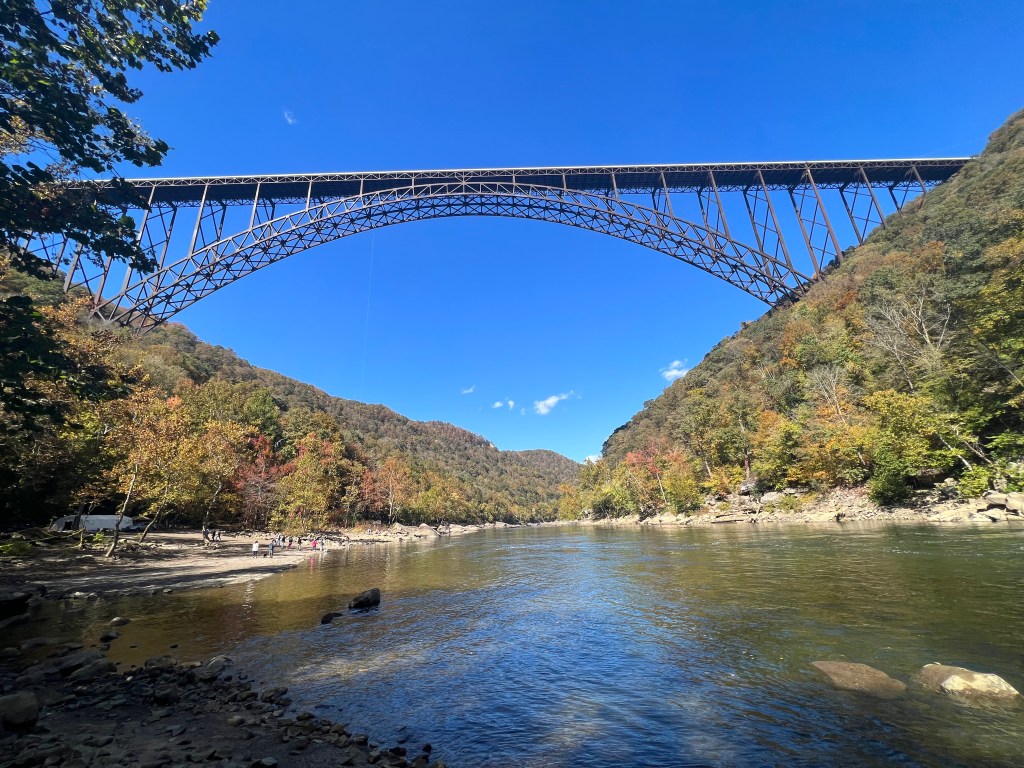
    The morning of our fourth day, we ventured to West Virginia to visit America’s newest national park, New River Gorge. This national park protects and maintains the New River Gorge in southern West Virginia and the Appalachian Mountains. The whole park encompasses over 70,000 acres of land along the river, which offers an abundance of scenic and recreational opportunities. Although its name could make you believe otherwise, the New River is actually among the oldest in the world. And as for the bridge, it stands the third longest in the world.


    We arrived to the park at the Canyon Rim visitors center (open year-round) near Fayetteville, WV. There are a few different trails accessible from the visitor’s center, offering scenic bridge overlooks from various viewpoints. Ironically, we arrived to the park one day prior to “Bridge Day,” which is the ONE day a year they close down the bridge to all traffic. Pedestrians are allowed to walk across the bridge, and others with a more daring sense of adventure are allowed to base jump off the bridge (bungee jump). This is one of only two spots you’re legally allowed to base jump in the United States. Unfortunately, we had only accounted for one day at the park, and couldn’t extend our trip an additional day to experience Bridge Day. From everything we heard though, it’s an awesome event!

    As you might’ve guessed, when not visiting for bridge day, many choose to explore this beautiful park via the river. White water rafting trips are quite popular in the area. However, we knew we would be visiting in mid-October, and weren’t totally sure how the weather would pan out.  We assumed the white-water rafting season would be finished for the year, however unfortunately we assumed wrong. It was beautiful out, and there was what seemed like an abundance of rafters on the river. While we were bummed to have missed the opportunity for ourselves, we were still able to watch the rafters on the river, which was pretty cool. The scenic park road takes you down by the old bridge, which is where the pick-up point for many of the rafting trips was located.

    One thing we did manage to do right on this trip was hitting the fall foliage near peak, which made all our drives to/from/in the parks absolutely stunning! After our day spent at New River Gorge National Park, we had an awesome meal at Pies & Pints in Fayetteville (highly recommend)! We then headed towards Charlotte, NC where we would be staying with another one of my mom’s besties for the night ❤

  • Cuyahoga Valley National Park

    Cuyahoga Valley became a national park in October 2000. It’s currently the only national park that originated as a national recreation area. The park is a refuge for native plants and wildlife. The Cuyahoga River, meaning crooked river, gives way to deep forests, rolling hills, and vast farmland.


    While visiting Cuyahoga Valley, we opted for a more passive park experience than normal. We took a ride on the Cuyahoga Valley Scenic Railroad, which covers a span of 51 miles. The track hugs the Cuyahoga River, and provides an eagle-eye view of the landscape from the comfort of a vintage railcar.

    After our 3.5-hour journey on the railroad, we were headed for Marietta, OH. This night, we would be staying with my mom’s childhood best friend, whom I’d actually never met before. While this could’ve gone a variety of different ways, it was actually the best surprise of the trip! We had so much fun getting to know her, her husband, and daughter. We had drinks and lots of laughs on their immaculate back porch area, took a tour of Marietta and saw where my mom grew up, and then had some tasty homemade soup for dinner. So very thankful for my mom’s lifelong friends and the way they took us in like family ❤

  • Mammoth Cave National Park

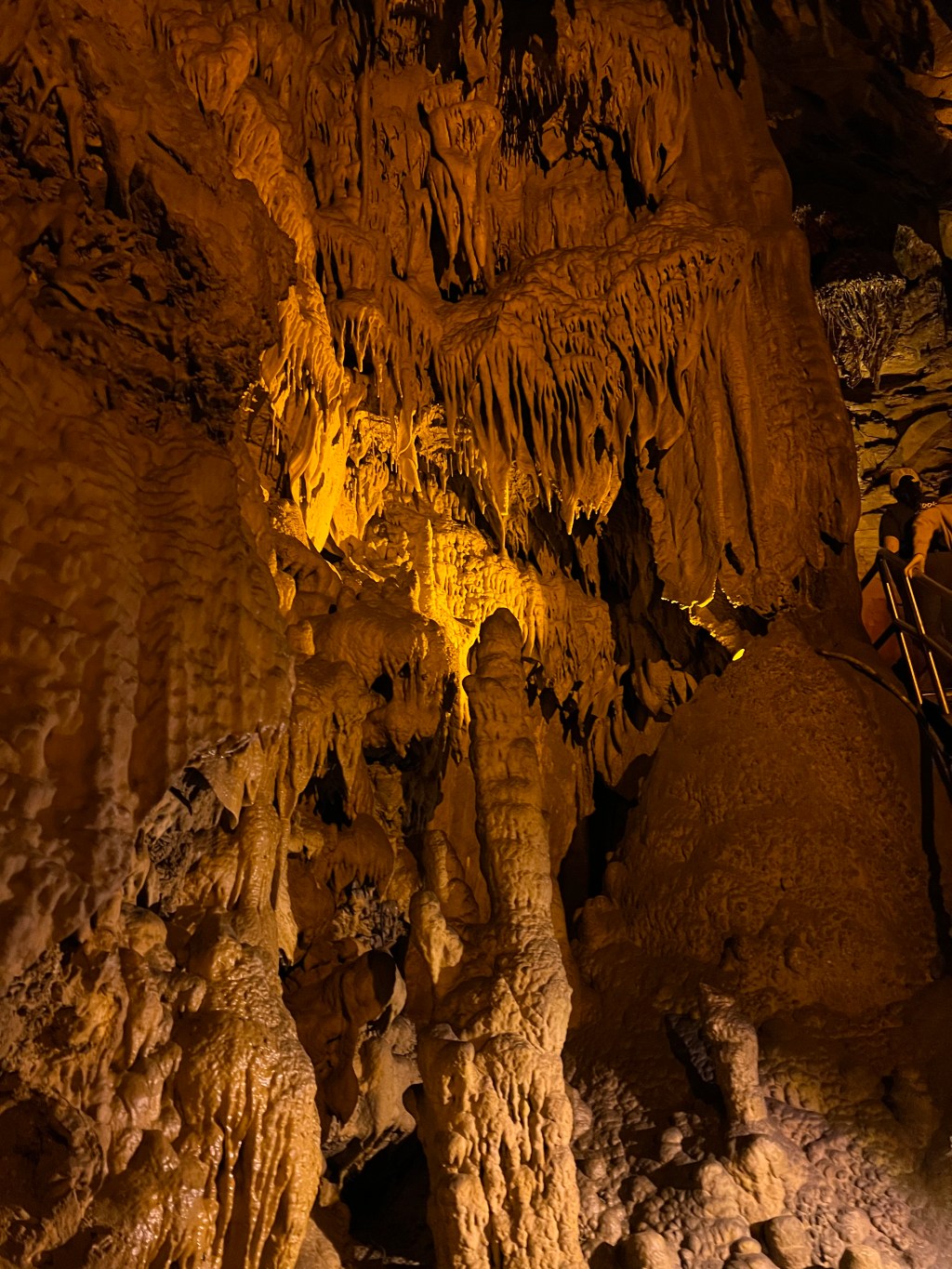
    Mammoth Cave National Park preserves the longest known cave system- the most extensive in the world. No known cave in the world is even half as long. There is evidence that humans explored Mammoth Cave 4,000 years ago, but it wasn’t until 1798 that the cave was rediscovered. Mammoth Cave was established as a national park in 1941, but it was a tourist attraction as early as 1816. This makes Mammoth Cave the second-oldest tourist side in the United States, just after Niagara Falls. The park is open year-round, and the cave maintains a cool 54-degrees all year. There are more than a dozen cave tours offered daily, each ranging in difficulty and distance. The park also offers specialty tours, such as lantern-lit and photography or geology-focused tours. 

    We booked the Domes and Dripstones tour, which is one of the harder tours offered at the park. The Domes and Dripstones tour begins with 280 stairs down into a sink hole, then passes through huge domes, large canyon passageways, and ends in the dripstone section known as The Frozen Niagara. I will confirm the tour ascends and descends hundreds of stairs and steep inclines. Throughout the tour you learn about the natural formation of the cave. There are currently 426 mapped miles, but they are still finding more miles every year—last year they added 8 miles, and an additional 6 miles this year. While on our tour, we found out they would be shutting down the Domes and Dripstones tour in 2 weeks (we visited in mid-October 2022) to pave the dirt path that’s walked on throughout the tour. They estimate it will be closed for at least a year to complete the renovations.

    After we left Mammoth Cave, things got interesting… Every road trip is usually memorable in its own way, right? Well, this one wasn’t any different. We started noticing some car trouble with our rental on our way to Mammoth Cave, but it got worse after we left. The car would start shaking around 50 mph, and when it neared 70 mph, it would be so shaky that it was difficult to steer. After many phone calls and a detour to the Louisville Airport, we were able to exchange our rental. Thankfully, over the past 5 years with all our travels, we’ve really had pretty good luck.

    Something special about this road trip was that along the way we would be connecting with family and friends. Before we left Nashville, we met up with our dear friend who used to work at the hospital with us. Even though it was for less than two hours, it was so nice to give her some big hugs and have breakfast together. Then after leaving Mammoth Cave, we headed towards Columbus, OH where we would be staying at my cousin’s house for the night. This was really a fun way to break up our drive and reconnect with loved ones. In Columbus, we enjoyed a home cooked meal, a back porch thunderstorm, and lots of doggy cuddles 😊.

  • Theodore Roosevelt National Park

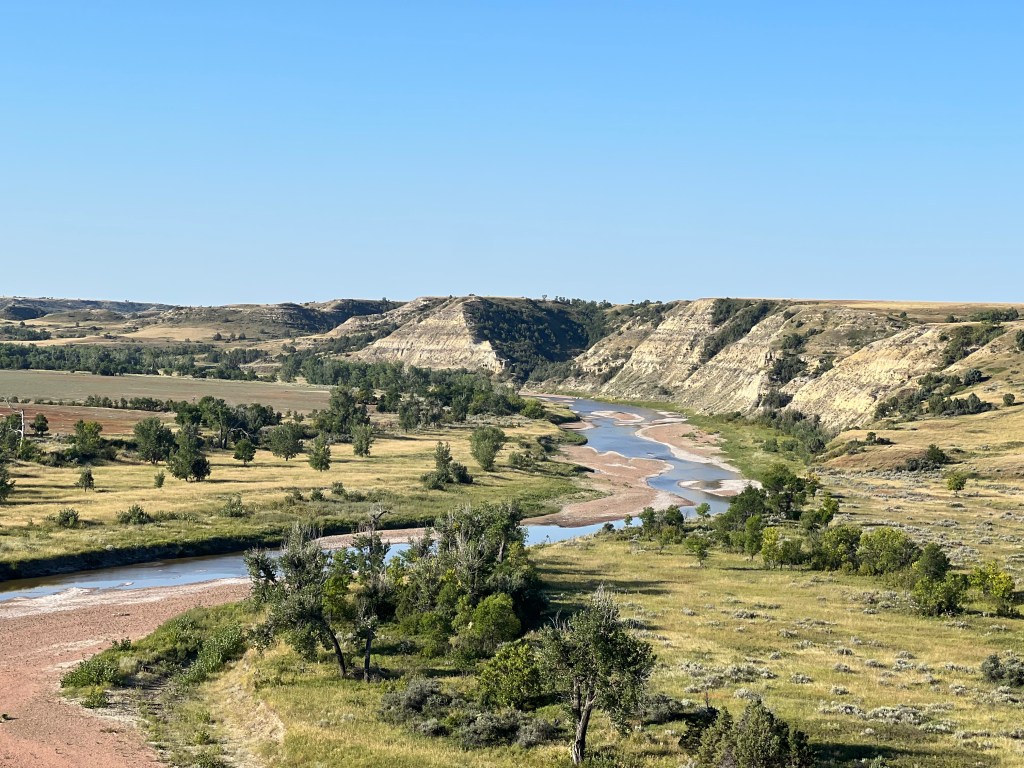
    Theodore Roosevelt National Park encompasses the badlands of western North Dakota.  This park honors Theodore Roosevelt and his presidency, which was marked by a legacy of conservation in our public lands. The park has two main units, North and South.  The South Unit is the most visited and easily accessible, located near the town of Medora. The park’s North Unit is 70 miles north.  Each unit observes a different time zone: the South Unit observes Mountain Standard Time (MST) and the North Unit observes Central Standard Time (CST), which can get confusing when you fly into CST, travel to MST, and need to fly out of CST the next day.


    Our short trip to Theodore Roosevelt National Park was unfortunately made even shorter due to a flight delay.  We eventually arrived on a Saturday afternoon, flying into Bismarck.  The original plan was to visit the south unit one day, and the north unit the next, however after our delayed flight and 2-hour drive to Medora, we weren’t left with much daylight to explore one side of the park our first day.  instead, we found ourselves exploring the cute, western town of Medora.  Arguably our favorite part of this trip was the wine bar we stumbled upon, Uncorked Medora.  Here we tried some delicious, local to North Dakota wines and flatbread pizza. 

    We stayed the night in the town of Dickinson, about 20 miles from Medora.  Dickinson has more hotels and services compared to Medora, which mainly has camping options.  The next morning, we started the day early, drove back to Medora and into the park.  The South Unit is mainly known for its short and accessible hiking trails.  It also has a nice, paved 36-mile scenic drive that loops multiple overlooks throughout the park. We also encountered more wildlife than what I expected.  The bison were plentiful, many literally crossing right in front of our car, and we also saw wild horses and the infamous prairie dogs.

    Popular South Unit Hikes:

    • Ridgeline Trail (0.6 mi RT): colorful badlands, grasslands, and bison
    • Coal Vein Trail (0.8 mi RT): geology of the badlands, grab an interpretive brochure at the trailhead!
    • Wind Canyon Trail (0.4 mi RT): wind sculpted canyon with views of the Little Missouri River (fav trail)

    Eventually, we had explored what the South Unit had to offer, and with not enough time left to make it to the North Unit and back before our flight, we found ourselves back at the wine bar. We sampled some more wines, and fueled up on food before traveling back to Bismarck to catch our flight home. This trip was one of our shorter ones, but no less sweet!

  • Glacier Bay National Park

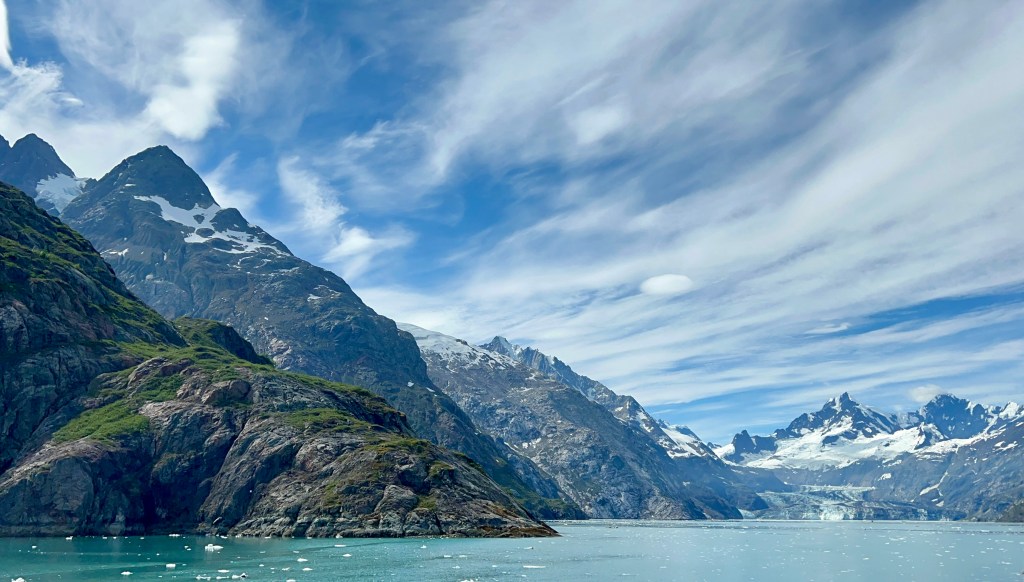
    Glacier Bay National Park encompasses 3.3 million acres of prestigious land and water.  The waters in Glacier Bay are some of the richest on earth, and because of this, it’s one of the largest protected preserves in the world.  It’s very common to visit Glacier Bay via cruise ship, and although cruises are able to visit the bay, they are not allowed to dock.  In addition, they have a limit of two cruise ships per day in the bay per day.  If you don’t pass through Glacier Bay via cruise ship, you can take a ferry or flight from Juneau to Gustavus.  Gustavus is a service town just outside the park, and is unreachable by road. From Gustavus, shuttles travel the short distance (15 min) to Bartlett Cove, which is where the visitor’s center and lodge of Glacier Bay National Park are located. 

    Bartlett Cove is the only developed area within Glacier Bay National Park.  Busy season is June-August, with limited services available outside those months.  The only scheduled boat tour in the park is the Glacier Bay Tour through Glacier Bay Lodge.  The tour is 8 hours long, and National Park Rangers are on board, narrating the tour.  Throughout the tour you’re able to take in a wide variety of wildlife and stunning glaciers.


    We arrived back to Anchorage from Wrangell St. Elias late at night, and unfortunately my friend had to emergently fly back to Utah.  This left me flying solo (literally) for the last park of the trip, but the silver lining being that everything was easy to navigate alone.  Early the next morning I flew from Anchorage to Juneau, had a layover in Juneau, and then took another flight from Juneau to Gustavus.  This was my first time to southern Alaska, and let me tell you, the views from the plane window were magical—flying over the deep blue waters with mountains dispersed throughout was something out of a magazine.  After landing in Gustavus, there was a park volunteer outside the “airport” with a shuttle bus to transport us all to the lodge in Bartlett Cove.  The process was pretty seamless, which was relieving because I didn’t have any cell service to fall back on if something didn’t work out.

    Once arriving to the lodge, I made dinner reservations and then wandered off to check out my room.  My room was rustic, but well kept, and honestly all I cared about was that there were blackout curtains!  After eating a delicious halibut dinner at the Fairweather Restaurant, I went for a short hike around the area.  The forest trail is a 1-mile loop and starts right outside the visitor’s center.  The trail takes you through a lush rainforest then across the beach and back to the lodge.  There were a couple different displays along the trail—one of an orca whale named Snow, who was hit by a cruise ship and washed up to shore, and another educating on the local Huna Tlingit tribe.  While walking along the beach, I also had a clear view of the Fairweather mountain range. This hike was the perfect after dinner activity before retreating for the evening.

    The next morning, I had a hearty breakfast at the lodge before heading to board the St. Juvenaly, which was the name of our tour boat.  It was an 8-hour tour, which is probably the longest boat tour I’ve been on, but I was so looking forward to it.  The water is my element, and I always feel at home when I’m around the water.

    Unlike my previous evening of clear, blue skies, the morning started off rainy and completely overcast.  Unfortunately we didn’t have much of a view of anything while leaving Bartlett Cove.  We stopped along the way to observe sea lions and puffins swimming on and around different islands.  However, much to my surprise, throughout the day we ended up seeing more bears than whales.  The bear activity was so active along the coast line- which was way cool and honestly so unexpected (for me). 

    A few hours into the tour we eventually came upon some glaciers.  Like I said earlier, it had pretty much been overcast up to that point.  However, as we were pulling up to our first glacier, the clouds parted and the sun came shining through.  It was spectacular.  Alaska was smiling at us 😊.

    During the tour, I learned there are a variety of glaciers: alpine, valley, and tidewater glaciers.  We had an amazing view of one of the more popular glaciers, John Hopkins glacier.  This glacier is 12 miles long, and is a tidewater glacier, which means it naturally calves into the ocean.  Glaciers always have retreating and growing phases, however nowadays their retreating phases seem to be longer and more frequent ☹.

    As we left the glaciers and headed back towards Bartlett Cove, the skies became overcast again, like they were waving us goodbye.  Unlike other boat tours I have been on in the past, most of the trip was spent inside the cabin area of the boat.  The cabin area was large, most likely because the weather is unpredictable here, with rain and wind being the norm.  When the boat slowed or stopped for wildlife, we could go on the upper deck for better views.  Our boat arrived back just in time for the shuttle back to the airport.  I took a flight back to Juneau, spent the night in Juneau, and then the next morning was on a flight back to Salt Lake City.  I left with a sense of accomplishment from having visited and explored all eight of Alaska’s rugged, yet breathtakingly beautiful national parks.

  • Wrangell St. Elias National Park

    Wrangell St. Elias (WSE) is the largest national park in the United States.  The park covers 13.2 million acres, and is home to 12 of the 20 tallest mountains in North America.  It is 6 times the size of Yellowstone!  Access to Wrangell St. Elias is difficult, but it is still technically one of the three Alaska national parks you can drive to—Denali and Kenai Fjords being the other two accessible by car.

    This was our seventh Alaska national park we were visiting, and it was arguably one of the best experiences we’ve had in any of the parks.  We had a full day ahead of us: flight seeing tour into the park, guided hike on Root Glacier, flight seeing tour back out of the park, followed by a 4 hour drive back to Anchorage.  Our flights in/out of the park were booked through Wrangell Mountain Air, and our guided hike was with St. Elias Alpine Guides.  I honestly can’t say enough positive things about our experience.  All of our guides were amazing; from our pilot, to the van shuttle driver, to our hiking guide, they were all super knowledgeable and shared so much of the park’s history with us.  I’m definitely a park nerd, so I relished learning all about America’s largest national park all day long.

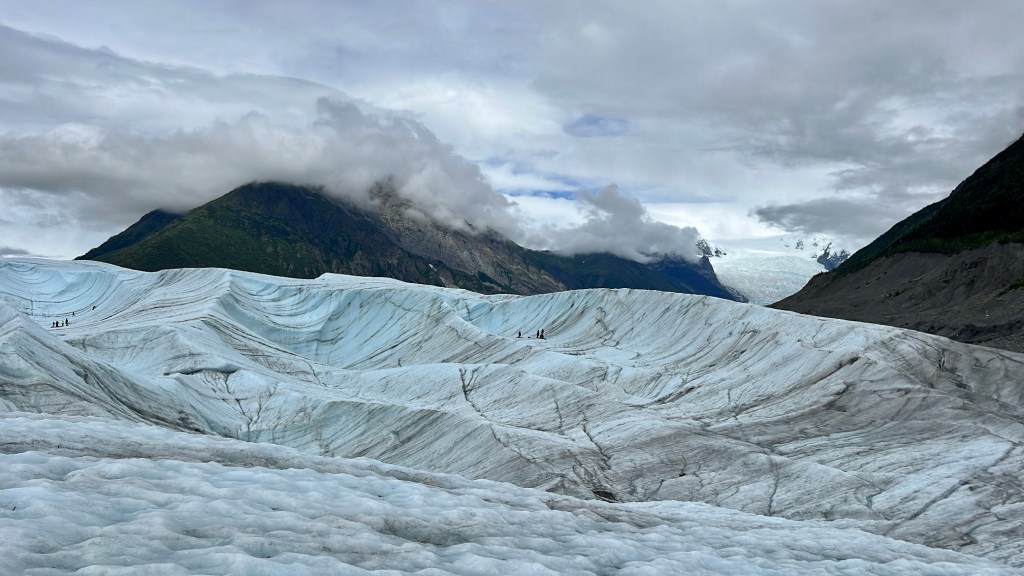
    Our flight seeing tour into the park departed from Chitna, and landed us in McCarthy. The flight was around 30-45 minutes long.  On our flight into the park, I got to ride in the co-pilots seat, which was pretty dang cool. My only regret was not getting a selfie with the pilot 😉.  After landing in McCarthy, we took a van shuttle along part of McCarthy Road, which happened to be on an old railroad bed. The van shuttle dropped us off in Kennecot, an old Copper Milltown built in 1911.  Our hiking tour on Root Glacier was 7 miles round-trip.  The glacier was so blue!  We trekked up along the glacier for a while, stopping to drink some fresh glacial water, and then watching some ice climbers while enjoying our lunches.  Our guide even prepared us some hot beverages to enjoy on the glacier.  I learned that an inch of glacier ice can hold up to 150 lbs- its so dense! We also were able to view the Stairway Icefall, which is 7,000 feet tall, making it the 2nd tallest icefall in the world behind the Himalayas.

    As if this day couldn’t have gotten any better, on our hike back to Kennecot, a cinnamon black bear crossed right in front of us on the trail!! Which was ironic because on our hike to the glacier, our guide was just saying how she had never seen a bear on one of her hikes before—she said the park is so large so it’s not often bears are in areas of the park where the people are.  However, I guess this guy was just really wanting some berries off this specific trail, and we were fortunate enough to observe him for a few minutes.  It was truly the cherry on top of the best day.

  • Gates of the Arctic & Kobuk Valley

    Welcome to the three-part series of Alaska’s National Parks, 2nd edition.  This summer I explored four more of Alaska’s eight National Parks: Gates of the Arctic, Kobuk Valley, Wrangell St. Elias, and Glacier Bay.  This was a much-anticipated trip, with lots of excursions and flights planned.  We were traveling to all of these parks via airplanes (commercial and charter), and because of this, I felt like I was holding my breath the entire time.  Leading up to this trip I had heard so many horror stories of cancelled flights/excursions, so I was praying we wouldn’t have to deal with any of that!


    The trip started out with us flying to Anchorage, which would be our home base during the first part of our trip.  Luckily, I have a friend who lives in Anchorage who was gracious enough to host us for a few nights—as well as lend us his car for 2 days, which was incredibly generous!  We were so thankful.  We had an awesome first 24 hours in Anchorage with gorgeous weather- we walked around one of my favorite places, Potter Marsh. 

    After our first night in Anchorage, we were off to Kotzebue.  Maybe you already knew this, or maybe you’re like me and had no idea, but Kotzebue is located above the Arctic Circle.  Thirty miles above the arctic circle to be exact.  With that being said, there’s not much to do in Kotzebue… except for being a popular gateway town to two very remote national parks- Gates of the Arctic & Kobuk Valley National Parks.

    We booked our trip to Gates of the Arctic and Kobuk Valley through Golden Eagle Outfitters.  This company recommends booking 3 days of buffer around your actual flight day to the park, in case of inclement weather, delays, or cancellations.  Because these two parks are so remote, often times weather prevents the planes taking off/landing in the parks.

    When we landed in Kotzebue, the weather was beautiful- sunny & blue skies.  Unfortunately, the previous days had been rainy and completely cloud covered, meaning multiple flights had been cancelled the past few days.  Since they were catching up on flights, we were told we probably wouldn’t get out on a flight until Sunday (two days later).  We were a little bummed about this, as there’s not much to do in such a remote town in Alaska, but we were obviously still grateful to be there and having these experiences in the first place.  Kotzebue only has one hotel, with other lodging accommodations mainly through AirBnBs.  After we landed, we walked from the airport to our AirBnB and checked in with our hosts.  After our host pointed out the restaurant and grocery store from her porch, we headed out to walk around.  We ate dinner at Little Louie’s, and then picked up a few staples from the grocery store.  Once we got back, we talked with our lovely AirBnB hosts (truly hard to express how amazing they were), and agreed to dinner and authentic Native Alaskan adventures the following night.

    The next day we killed some time by sleeping in, walking along the waterfront and watching the seals play, and then eventually walking back through town to our AirBnB.  In the evening, we had fresh salmon for dinner with a side of Muktuk.  Muktuk is a traditional food of the peoples of the Arctic, and it consists of whale skin and blubber- sounds appetizing, right? 😉.  They would literally eat this to stay alive in the winter months.  It’s not something I’ll probably eat ever again, but I’m glad I tried it once.  After dinner, we went out for our own native experience.  We learned how to salmon fish with a gillnet!  This was an incredible experience; one I’ll likely never forget.  We learned how to pull the net in, get the salmon out of the net, carry and rinse them off in the water, and even how properly fillet (sort of lol).   These unexpected, spontaneous activities are some of my favorite memories.  I doubt I’ll be able to ever eat salmon again without thinking back on this cool experience.

    Finally, Sunday came along and we got the call from Golden Eagle for our 1 pm flight departure!  We walked to the airport and waited to board our flight with fellow “parkies.”  We learned this term is used to describe people trying to go to all the National Parks.  Like us, most of them only had a few parks remaining!  After a bit, all 8 of us boarded our flightseeing tour to two of the most remote parks in the United States.  Our whole trip lasted about 4.5 hours, with about 20 minutes on the ground in each park for pictures.

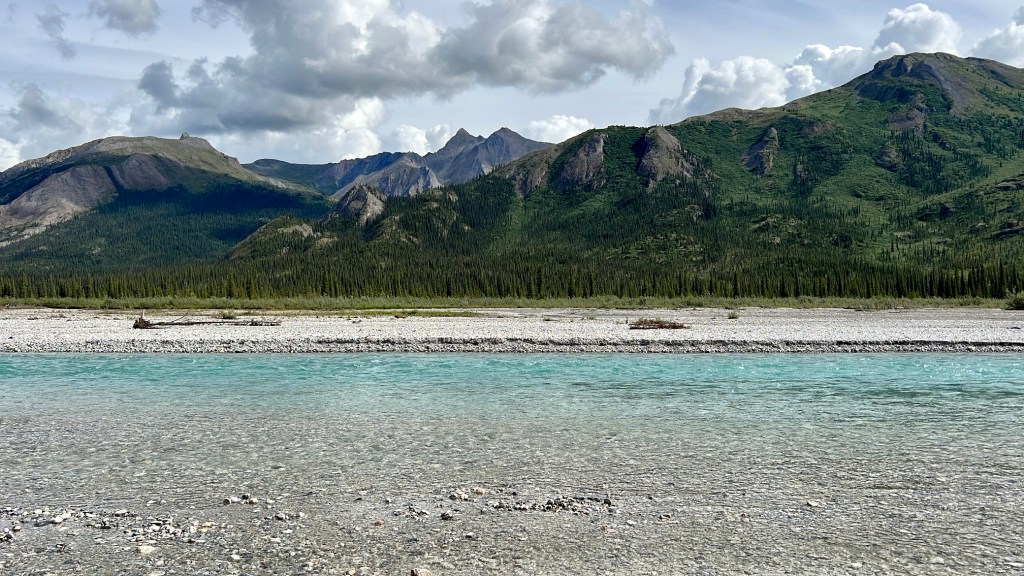
    Gates of the Arctic was up first.  On our way to Gates, we also flew over Noatak National Preserve, which was so beautiful!  I guess I didn’t really know what to expect when flying/landing in Gates of the Arctic, but I was completely blown away.  It was honestly the most amazing experience.  The jagged peaks and mountains, glacial blue waters, untouched land- it was all unbelievable.  Pictures of course don’t do it justice.  Gates of the Arctic is the northernmost national park in the United States, with the whole park being situated entirely north of the Arctic Circle.  It’s the ultimate North American wilderness!!

    Like I mentioned previously, we spent about 20 ish minutes on the ground before flying on to Kobuk Valley National Park.  Many locals refer to Kobuk Valley National Park as “The Sand Dunes.”  Which now makes sense, because this park has the most northern sand dunes in North America.  The dunes were formed by the grinding of ancient glaciers, and they continue to grow by approximately 1 inch per year.  Unlike Gates of the Arctic, Kobuk Valley has been home to humans for as long as there have been people on this continent.  Some of America’s very first inhabitants called Kobuk Valley their home, and lived among some very big game, including the woolly mammoth.

    After our time in Kobuk Valley, we headed back to Kotzebue.  Our last night included some more salmon fishing and fillet mastering.  Our flight back to Anchorage left Monday afternoon.  When reflecting back on the first four days of our trip, they were truly unique.  The pace was so much slower compared to most of our other trips, but I think we found value in that.  However, once we were back in Anchorage, it was full speed ahead! 😉

  • Mesa Verde National Park

    Mesa Verde National Park is located in southwest Colorado.  The Park is known for its well-preserved Ancestral Puebloan cliff dwellings.  The cliff dwellings provide insight into the lives of the ancient people who once farmed on the mesa tops.  After living on the mesa top for nearly 600 years, the Ancestral Puebloans began building dwellings beneath the impressive, overhanging cliffs.  Petroglyphs that are left, offer further hints into their culture and way of life, which lasted in the dwellings for about 700 years.  Today, Mesa Verde National Park protects the cultural heritage of 26 different tribes, and offers other visitors an amazing glimpse of history.


    Our day started in the Wetherill Mesa area of the park, which embraces some of the park’s most impressive cliff dwellings.  We had tickets for a ranger-guided tour of Long House.  Long House is the park’s second-largest cliff dwelling, and about the same size as the Cliff Palace (the park’s most famous cliff dwelling).  The village of Long House includes about 150 rooms and 21 kivas, and was thought to inhabit anywhere from 150-175 people.  I learned that kivas were a place for extended family gatherings or ceremonies.  However, Long House also has a large, ceremonial plaza, actually the only dwelling in the park known to have one.  This was considered a public space, meaning for other people in the community, and not just for the people living at Long House.  The ceremonial plaza could hold up to 100 people at a time.

    The park ranger informed us that the Puebloan people most likely inhabited the cliff dwellings in the 1200s A.D., and likely moved down from the mesa tops due to water sources, temperature, and protection.  The dwellings would keep cool in the summer, and warm in the winter.  There is an area in Long House where water comes in from a spring, which is considered sacred today because it is water of the ancestors.

    Overall, our guided tour was about 1.5 hours, and honestly, I loved every minute of it.  I loved learning about the Ancestral Puebloan people and being able to see things firsthand while learning.  After we finished the tour, we walked back to the main Wetherill area, and hiked down to Step House for a self-guided tour.  This is the only cliff dwelling in the park that can be visited without a reservation.  Step House was much smaller than Long House, most likely home to only 3-40 people.  Two villages from different time periods inhabited Step House.  The first occupied around 500-600s A.D., and then again in 1200 A.D.

    After we finished at Step House, we ventured over to the other side of the park, diving the Mesa Top Loop Road.  This road had several overlooks such as Navajo Canyon and Sun Point, which offered amazing views down into adjacent canyons of more cliff dwellings.  We stopped at some different pit houses, which is where the Puebloans lived on the mesa tops, as well as the ceremonial Sun Temple. 

    However, the  c h e r r y  on top of an already amazing day, was seeing bears!! While we were driving from the Wetherill Mesa Rod to the Mesa Top Loop Road, we saw three bears cross in front of us.  We were both shocked, as it didn’t even cross our minds to be on the lookout for bears in Mesa Verde.  But, as our (good) luck would have it, a mom and two cubs crossed the road right in front of us.  We got to watch the two cubs play in the grass on the side of the road, and then eventually see them walk up the mountain behind their mama.  It was seriously one of the best & cutest bear experiences I’ve had in the national parks!